Implantology
A secure replacement for lost teeth, from the root up.
Implants are the most biologically natural way to replace one or more missing teeth. Placing a titanium implant not only spares the neighbouring healthy teeth from being ground down, it also prevents the resorption (loss) of jawbone that naturally follows the loss of a tooth.
Working with experienced oral surgeons, we carry out careful planning and the placement of the world’s finest implant systems. After the necessary period of osseointegration, Dr Stefanović makes the prosthetic part, the crowns or bridges on implants, which behave like your natural teeth in function, feel and appearance.
- 3Djaw scan before placement
- 7–10 daysuntil the sutures come out
- 2–6 monthsfor the implant to fuse with the bone
What an implant is
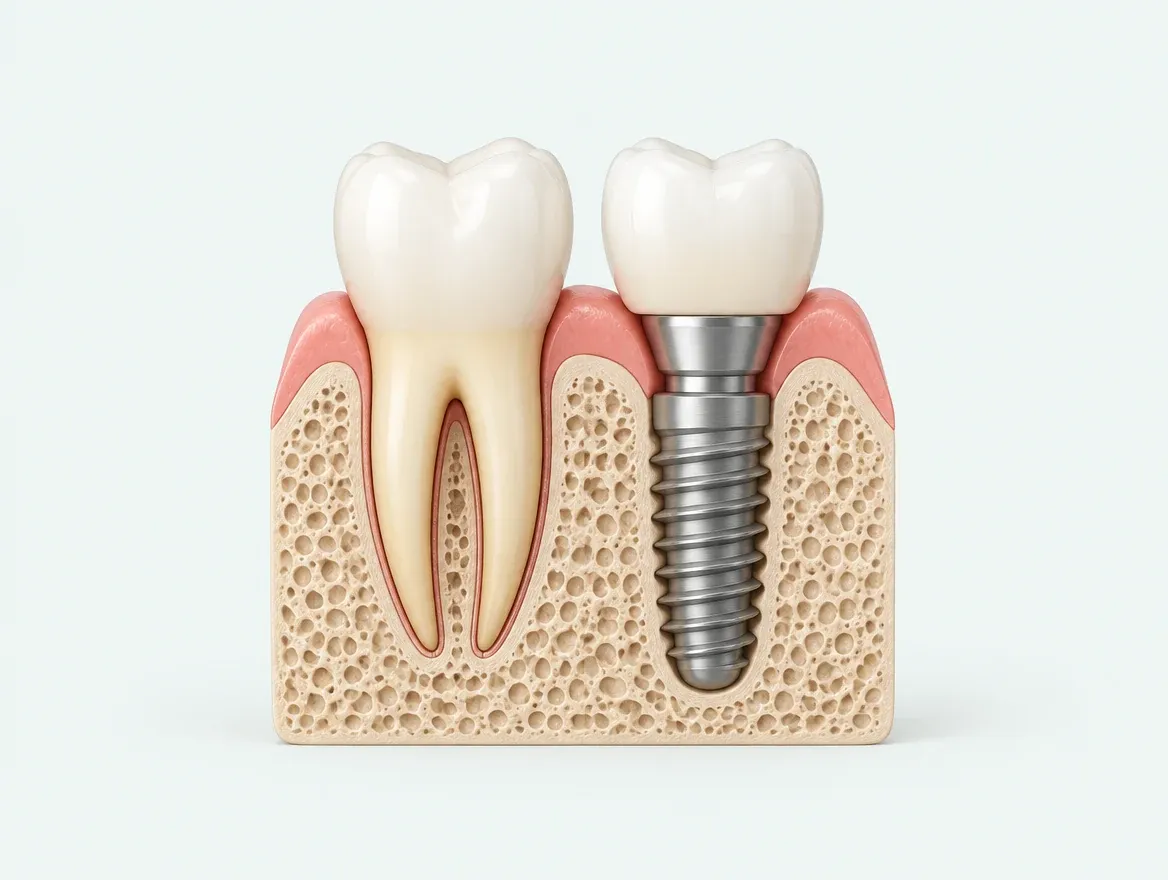
An implant is a titanium screw placed into the bone where a tooth is missing. Titanium is biocompatible and has been used in medicine for decades, among other things for artificial joints. There is no such thing as the body rejecting an implant: in a small percentage of cases, two to four percent, the bone fails to integrate around the threads, which is associated with conditions such as diabetes and osteoporosis, and with smoking.
How placement works
 01
3D scan and plan
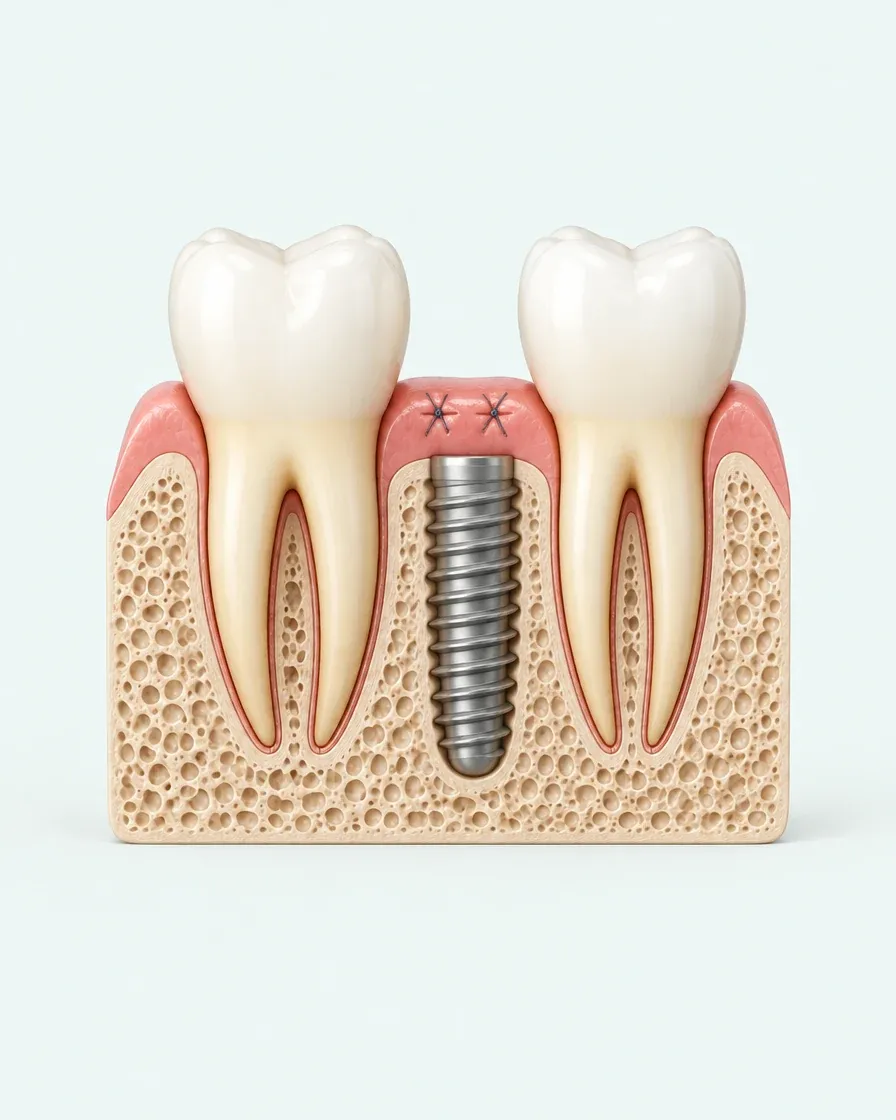
Before placement we analyse a 3D scan of the jaw and measure the bone. Where the bone lacks adequate dimensions, it can in some cases be augmented.
 02
Placement
The procedure is performed under local anaesthesia, and the sutures are removed after seven to ten days.
 03
Osseointegration
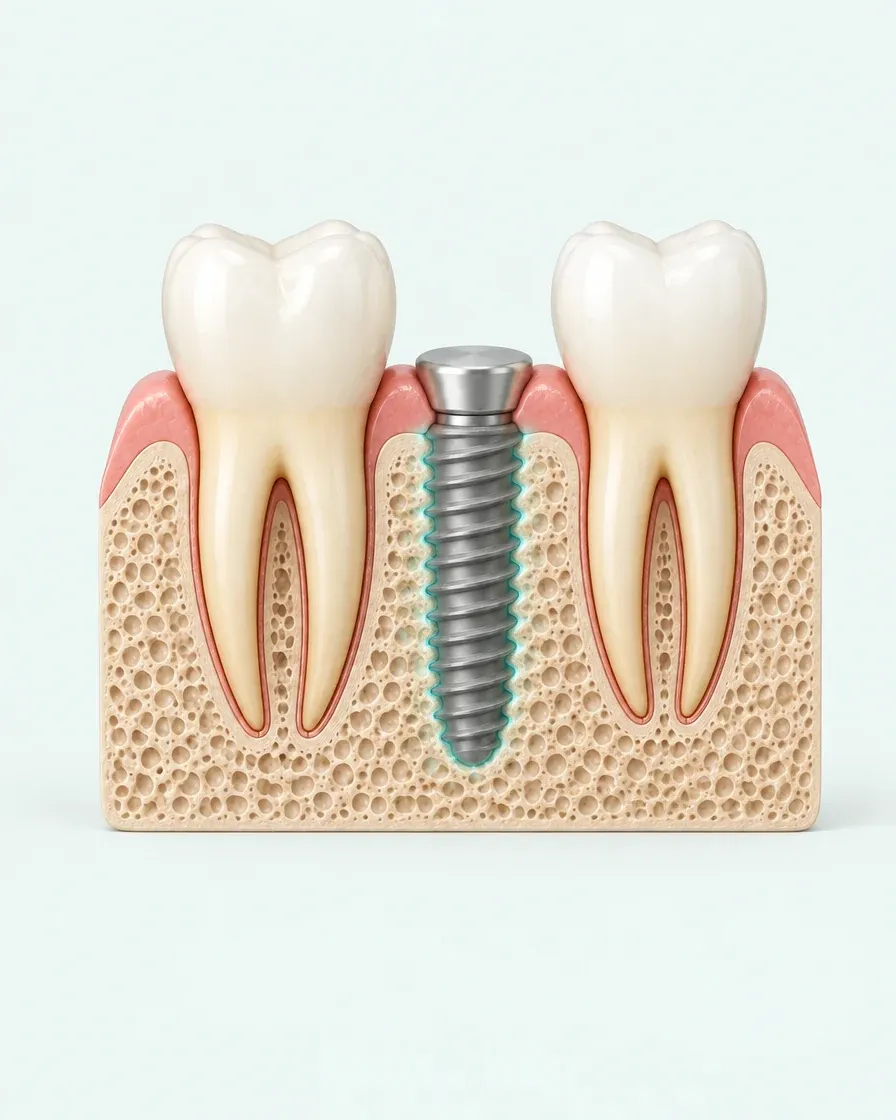
For two to six months the bone grows into the implant threads. A temporary restoration can be worn during that time.
 04
Final work
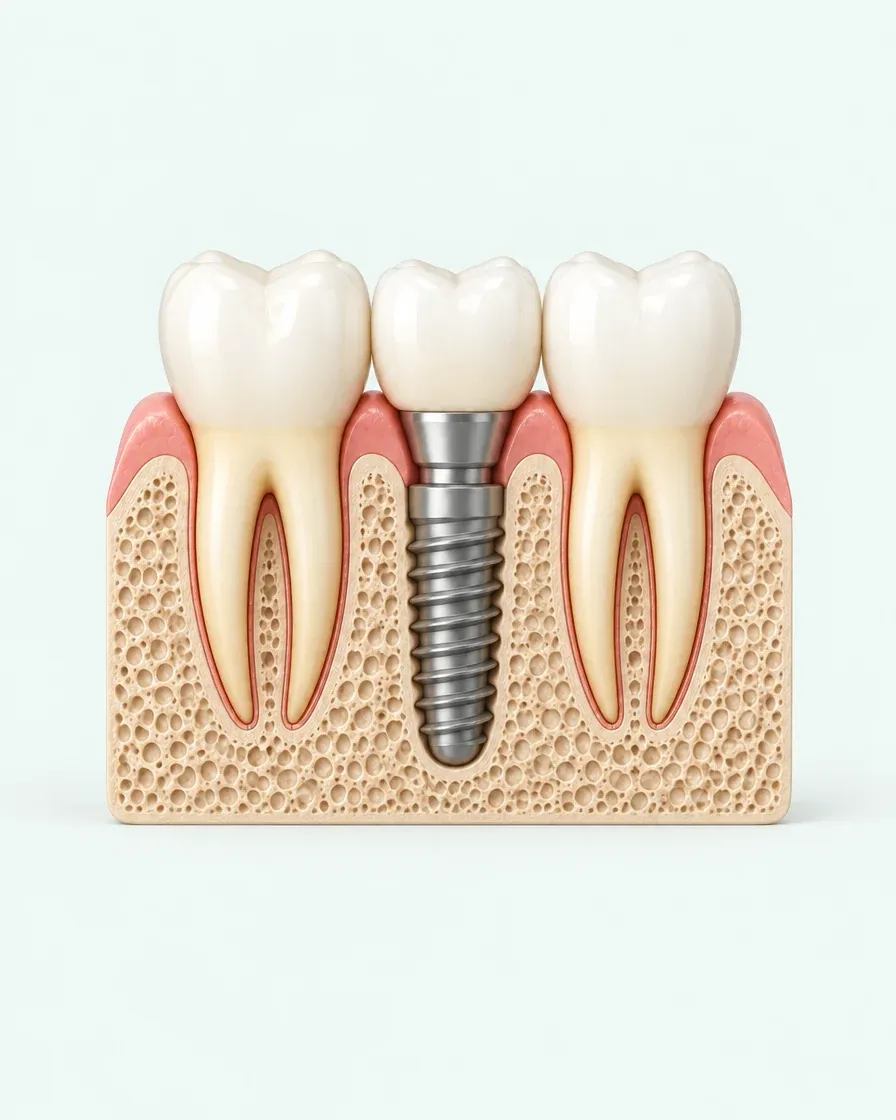
The crown, bridge or denture is produced once the implant has firmly integrated.
Prosthetics on implants
From a single tooth to a complete arch. What is actually made depends on how many teeth are missing and how much bone you have.
Single crown on an implant
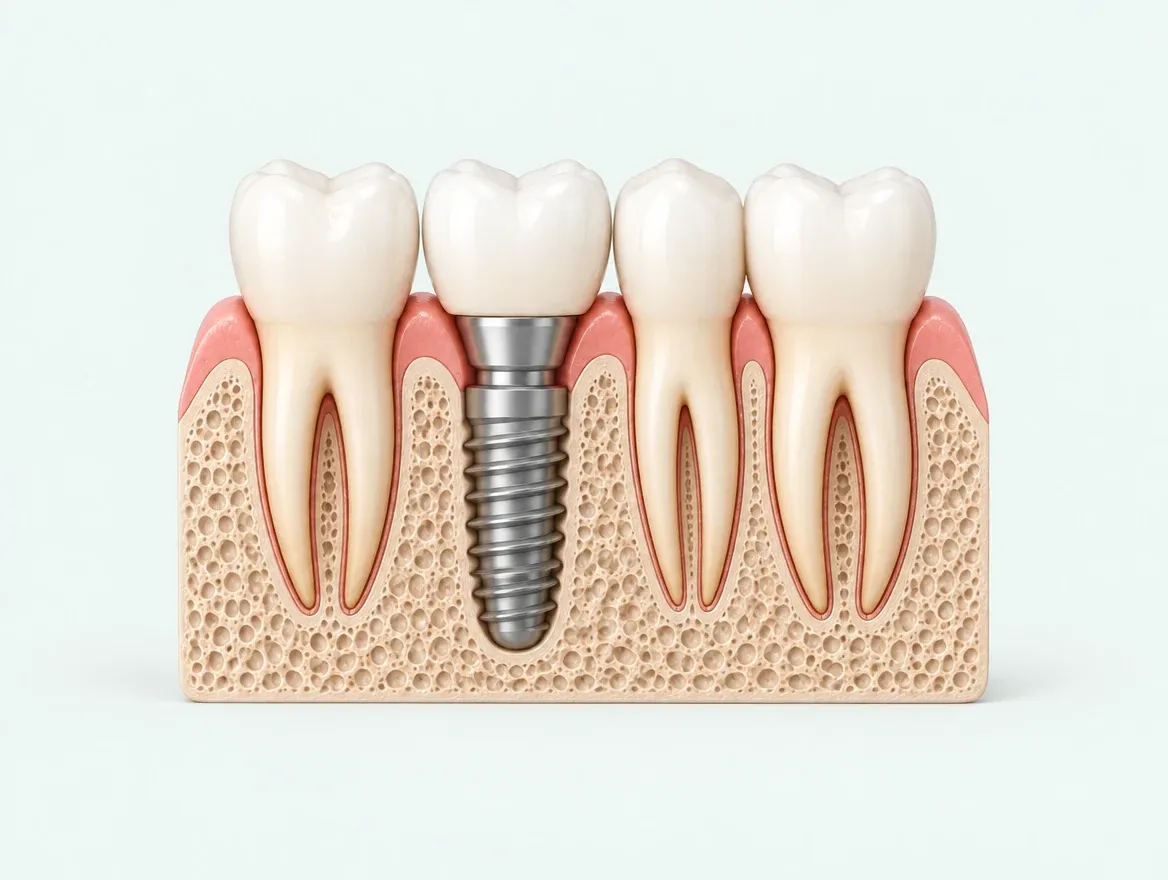
A single tooth
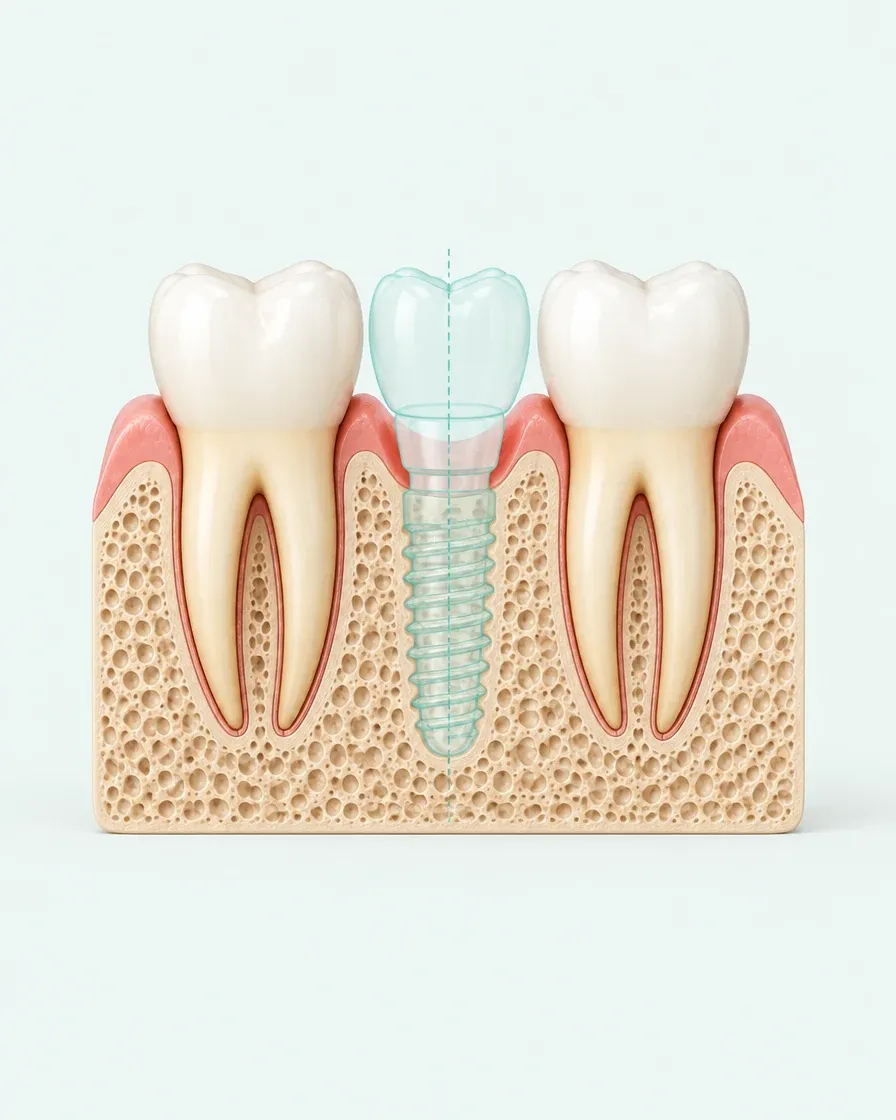
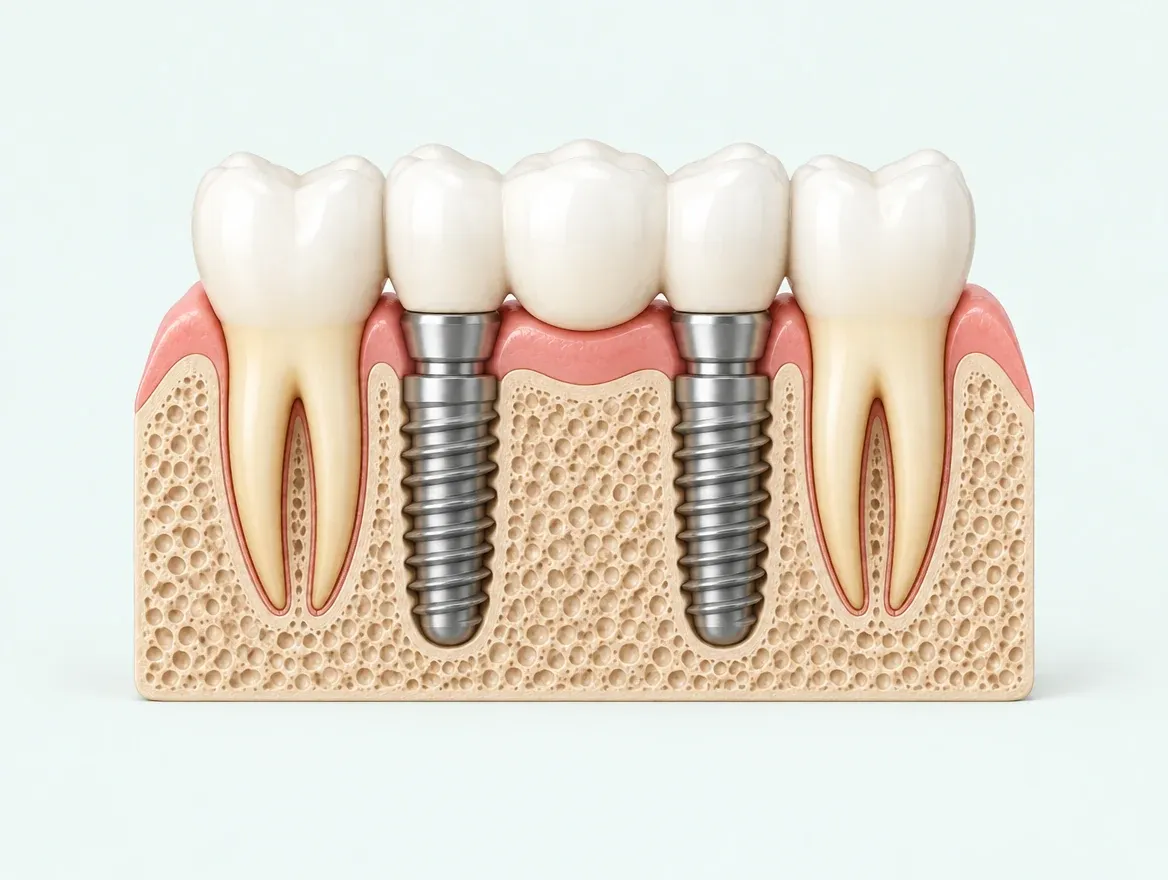
One implant carries one crown, where the tooth is missing. The neighbouring teeth are left untouched: they are not ground down, as they would have to be to carry a conventional bridge.
Bridge on implants
Several teeth in a row
When several adjacent teeth are missing, the bridge rests on two or more implants instead of your own teeth. The number and position of the implants follow the span of the bridge and the distribution of chewing forces.
All-on-4
Full arch, fixed
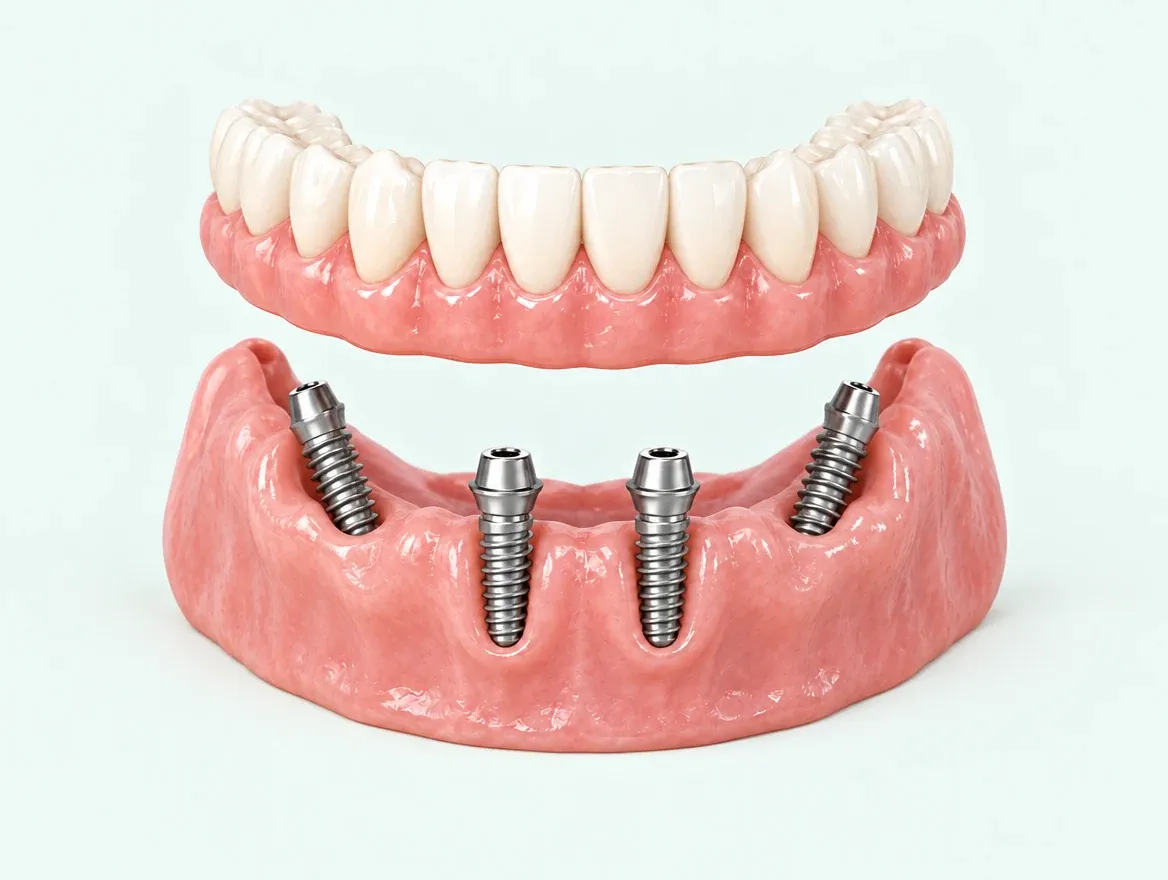
A complete arch on four implants. The two rear implants are placed at an angle, using the bone that is already there, which in a good number of cases avoids bone grafting. The restoration is fixed and does not come out.
All-on-6
Full arch, fixed
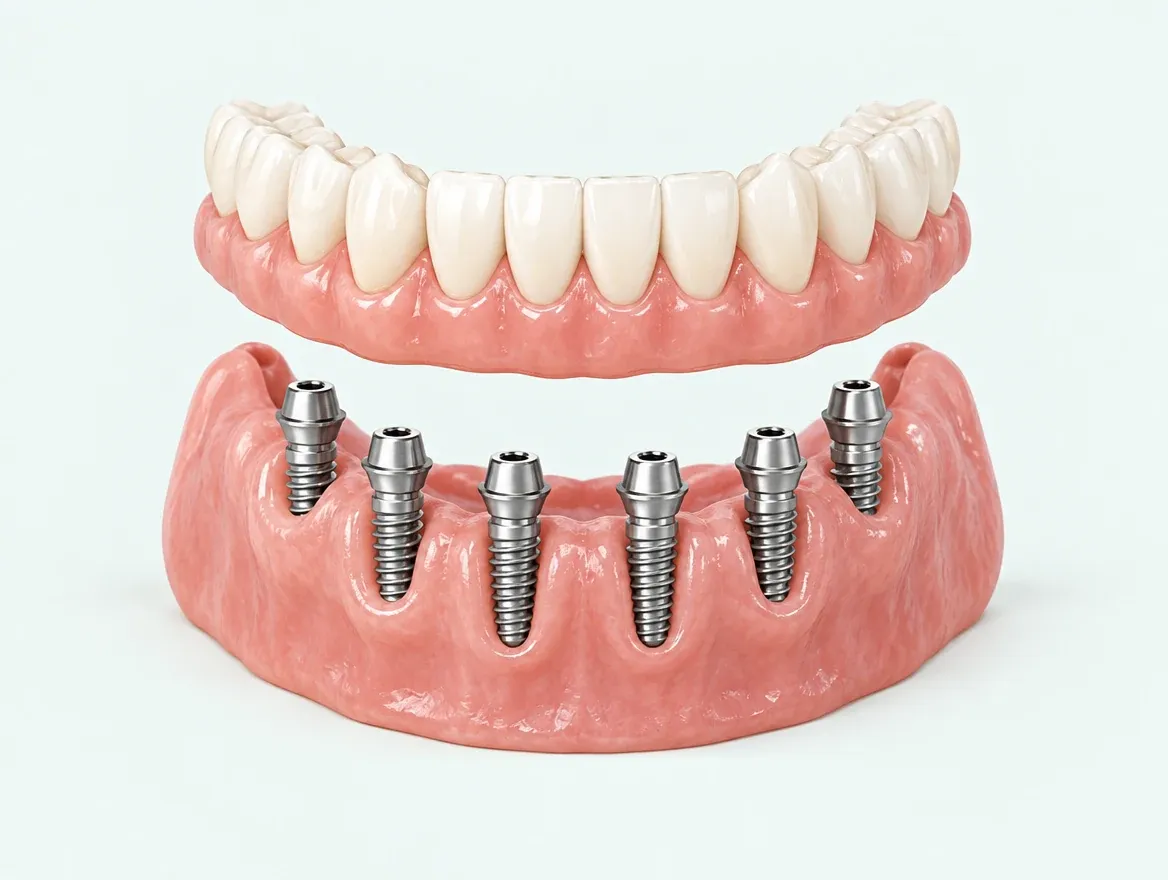
Six implants, placed straight, distribute the load more evenly and give greater stability, but they also require more available bone. Whether All-on-4 or All-on-6 is right for you is decided by the 3D scan of the jaw, not by the number of implants.
Locator-retained denture
Edentulous jaw, removable
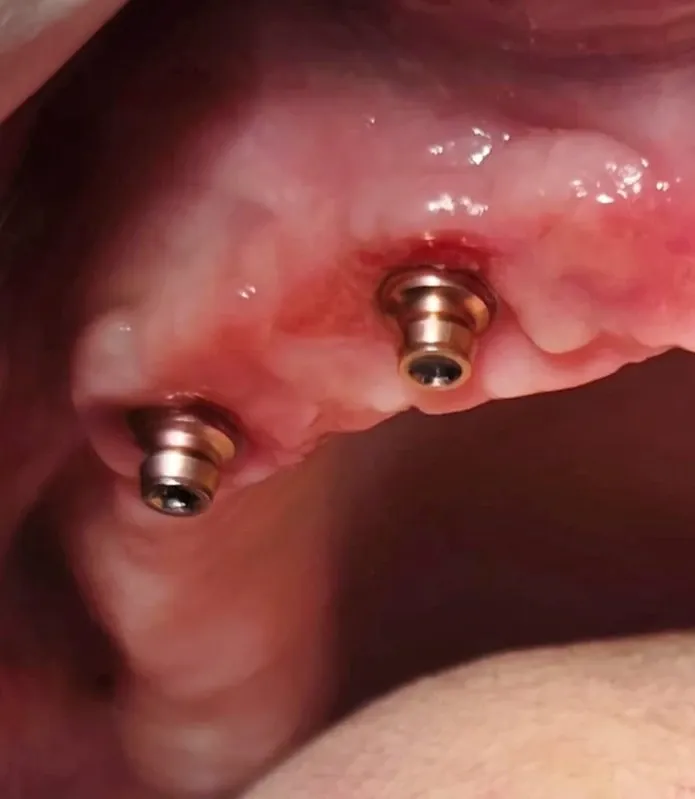
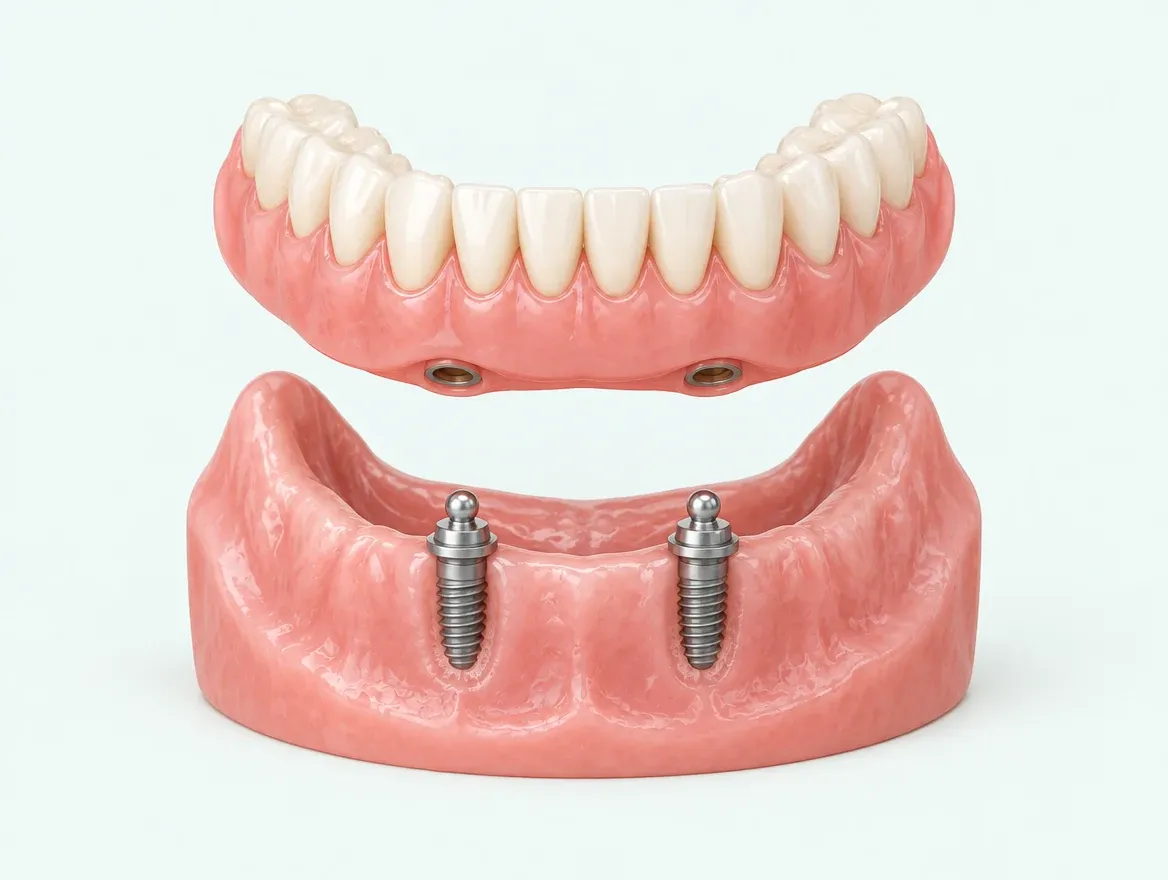
Four implants in the upper jaw and two in the lower carry locators, the precise connectors the denture attaches to. It sits firmly and comes out for cleaning.
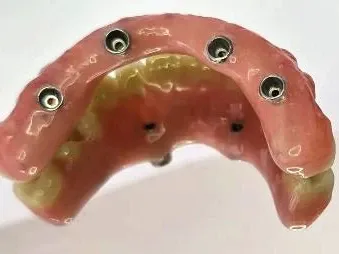
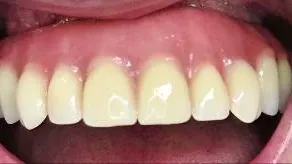
Finished All-on-4 restoration, underside, with four screw access holes
Common questions
How long does an implant last?
An implant has no fixed lifespan. What matters is a precise restoration, correct loading, good hygiene and a check-up at least once a year. If the restoration ever needs replacing, new work is made on the existing implant.
Is placement painful?
The procedure is performed under local anaesthesia and is comparable to a tooth extraction. Sutures are removed after seven to ten days.
What if I do not have enough bone?
In some cases the bone can be augmented, and when placement is not feasible we will propose the prosthetic solution that works best in your situation, usually a combined restoration or a denture.
Related services
The solution starts with an examination
A thorough examination, X-ray analysis and treatment plan proposals with prices. You decide at your own pace.